Summarize / Synthesize the information you learned in class this session, and how it will be useful in your classroom.
Tonight is our last meeting for Education 337. After taking this class, I feel as though I have a better understanding on the individual parts of language. However, I now have a deeper understanding of certain information that I wasn't familiar with before this class.
I see, now how each part of the language arts is equally important, and that it is best to emphasize each part. I enjoyed this class, and getting to work side-by-side with my classmates. I think that having a smaller class was beneficial because it allowed us time to talk and get things done without being in class all night. I enjoyed our blog posts about books, and how we could use each book in a lesson plan or an individual activity. I discovered new things that I could incorporate into my future lesson plans and how to do so in a fun way. I hope that I can continue to build on the information that I learned here in these eight weeks and be a successful elementary teacher.
God Bless!
Janaye
Wednesday, July 20, 2016

Thursday, June 16, 2016
Week 5 Blog : June 29, 2016
10 Variations of Cinderella (I found a total of 83, that's crazy!!!)
I found all these variations of Cinderella to be interesting, and some quite amusing. In each story the main character is either named Cinderella, or some variation (based on the type of book it is ). For example, there is a book named Cinderella Penguin and the main character in this story is a penguin. Another book is titled Dinorella, in which the character's name is also a variation of Cinderella, but relates to the story (which is about a dinosaur) and Dogerella, (which is about a dog). The names of each story, for the most part give the reader the idea that the story is going to be something related to the story of Cinderella ( as we all learned as a child, or in elementary school). Each story take a unique "spin" off the original Cinderella story that pertains to the setting of the story. I would love to use some of these books as a compare and contrast assignment, we could look at 3-4 different books and compare and contrast them based on similarities ( such as the name Cinderella, a handsome prince, a wicked stepmother..etc) and the contrasts between books would be endless!

The Rough-Face Girl by Rafe Martin: This is the classic children's story of Cinderella that tells of a disfigured Algonquin girl who wins the heart of a mysterious being who lives by the lake near her village. The Invisible Being is looking for a wife, and all the girls in the village try for his affections, But only the girl who can see him, and proves it, will be his bride.

Adelita: A Mexican Cinderella Story by Tomie dePaola: This story about a girl named Adelita. She is a kind-hearted young woman with a jealous stepmother and two hateful stepsisters. A young man, Javier, falls madly in love with beautiful Adelita, but she disappears from his fiesta leaving him with only one thing, her shawl.


Dinorella: A Prehistoric Fairytale by Pamela Duncan Edwards & Henry Cole :
A story loosely based on Cinderella featuring dinosaurs. The duke falls in love with Dinorella when she rescues him at the Dinosaur Dance.

A story loosely based on Cinderella featuring dinosaurs. The duke falls in love with Dinorella when she rescues him at the Dinosaur Dance.

Cindy Ellen: A Wild Western Cinderella by Susan Lowell: A rancher marries the orneriest woman west of the Mississippi, and she had two daughters who were just like her. The rancher also had a daughter, who Cindy Ellen.
Cindy Ellen is one of the best cowgirls for miles around, but her mean old stepmother and stepsisters make sure she does nothing but dirty work around the ranch all day long.

Cindy Ellen is one of the best cowgirls for miles around, but her mean old stepmother and stepsisters make sure she does nothing but dirty work around the ranch all day long.

Little Gold Star: A Spanish American Cinderella Tale by Robert D. San Souci: Mary rewards Teresa's good deeds with a shining gold star. Teresa's unkind stepsisters, Isabel and Inez are punished with hideous horns and donkey's ears. Will Teresa outshine her sisters at the upcoming festival?


Walt Disney's Cinderella by Cynthia Rylant: The timeless classic of Cinderella that many of us grew up with.


Prince Cinders by Babette Cole: A funny twist on a classic Cinderella tale.

Ella Enchanted by Gail Carson Levine: When she was born Ella is "cursed" by fairy named Lucinda, who gives her the "gift" of obedience. Anything anyone tells her to do. Ella is tormented by her stepmother and stepsisters, and eventually she sets out on a quest for freedom and self-discovery as she tries to find Lucinda to undo the curse.


Dogerella by Maribeth Boelts: Dogerella is constantly removing the fleas and fluffing the tails of her stepdog mother and mean stepdog sisters. Dogerella dreams of a home where she is loved. In a castle nearby, lives Bea, a princess who wants a pet to call her own. Both the dog and the princess get their wish.
A great website to find information regarding books :
Enjoy!
Week 4 Blog: June 22, 2016
Top 10 Books for Making Connections:
When I Googled books on making connections these are a few of them that popped up. These books help students to make connections to characters in the book. We all go through similar situations, scenarios, and have many things in common with one another ( although it may not always feel that way ). As you read through my list, you will see that the situations that the books focus on are all something we have at one time dealt with as a kid or young adult. We have all had bad days, dreams that seemed out of reach, memories that we can reminisce about with family and friends, and we have all been selfish a time or two... each of these books could be used with different age groups since most are not relatable to students in say the 2nd grade. We could read the book together as a class, and make connections with the main character(s). If we are reading Alexander and the Terrible, Horrible, No Good, Very Bad Day, we could talk about the things that have happened to Alexander and discuss whether or not some of those "horrible" things have happened to us, and how it made us feel. Then we could talk about the crazy things that happened to Alexander and how we would have handled that. Perhaps, if Alexander handled a particular situation poorly, the students could write a different way that Alexander could have handled it. There are a lot of ideas that could get the student's creative minds flowing.


Allie’s Basketball Dream by Barbara E. Barber : It takes hard work to accomplish a goal, or a dream, there will always be ups and downs.

Birthday Presents by Cynthia Rylant: We enjoy reminiscing about stories from our past


Dolphin’s First Day: The Story of a Bottlenose Dolphin by Kathleen Zoehfeld: Even dolphins have to grow up and learn how to take care of themselves. Children see that we all must depend on someone to teach us when we are young.

It’s Mine! by Leo Lionni: A story of three selfish frogs, who eventually learn how much fun sharing can be. ( One of my favorites from childhood )

In My Momma’s Kitchen by Jerdine Nolen: Good times and stories are made and shared in the kitchen


Hey World, Here I Am by Jean Little: In the middle school and teenage years, students all deal with finding their true meaning in life, learning to take care of themselves independently and dealing with heartbreaks.

Thunder Cake by Patricia Polacco: overcoming your fears.
Week 3 Blog: June 15, 2016
Top 10 Children's Books for Kindness:
These books all show kindness in a different way. I would love to use these books for a lesson on manners, or something similar. We could read different books each week that focus on kindness, sharing, being thankful, etc. These sorts of books could lead students into great discussions and we could each name something we could do each day to be kind, thankful and share with others. I recommend many of these books for students in grade K-2.
1.) Good People Everywhere by Lynea Gillen: Colorful picture book that inspires children to be caring, grateful and kind by showing there is good in people and kindness is always appreciated.

2.) Hey Little Ant by Phillip M. Hoose: Life from an ant's perspective. Showing that kindness should extend to all living creatures.

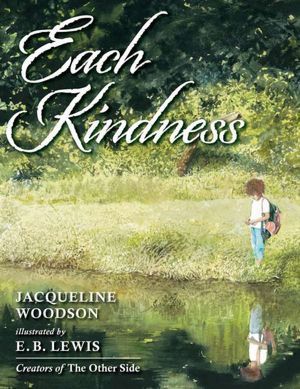
3.) Each Kindness by Jacqueline Woodson: A girl continuously ignores another girl who is attempting to befriend her. Then one day the teacher addresses the importance of kindness and the little girl realizes that she must show kindness back. Showing the reader that a little kindness can go a long way.
4.) A Sick Day for Amos McGee by Philip C. Stead: Amos McGee is a wonderful zookeeper who cares deeply for all of the animals in the zoo. Then one day Amos is sick, and the zoo animals wish to return the favor and care for him. This shows the reader that kindness is a two way street, sometimes you have to give it to get it in return.

5.) Have You Filled a Bucket Today? by Carol McCloud: This book uses a metaphor- everyone has an invisible bucket that either needs to be filled or dipped into. When we are kind to others, we dip into our bucket and help fill the bucket of another person. When we are not kind, our bucket quickly becomes empty.

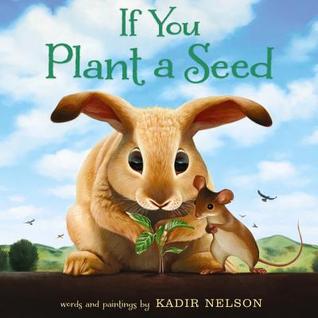
6.) If You Plant a Seed by Kadir Nelson: This book demonstrates the process of planting and growing, but it also shows how a seed of kindness can bear sweet fruit.
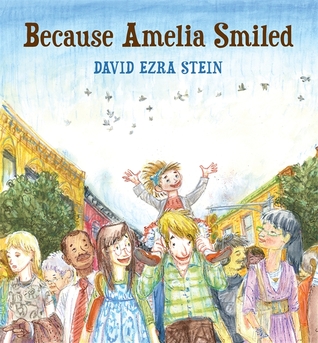
7.) Because Amelia Smiled by David Ezra Stein: This story reminds us that even a small dose of kindness is sure to spur more and more kindness, which could eventually make its way back to you! ( Great Author! )
8.) Horton Hears a Who by Dr. Seuss: Horton, the elephant hears a Who on a speck of dust. Horton attempts to save this tiny civilization when no one believes they even exist. This book teaches readers to be kindness and perseverance.

9.) The Giving Tree by Shel Silverstein: Everyday the boy comes to the tree to eat of her apples, swing from her branches, or slide down her trunk. This makes the tree very happy. As the boy grows older, he wants more and more from the tree and eventually the tree has nothing more to give to the boy. This story shows how kindness in the most sacrificial way. Hopefully this book could be used to bring attention to the kindness that we are shown every single day. ( One of my favorite books! )

10.) The Invisible Boy by Trudy Ludwig: Brian is the invisible kid at school, no one seems to include him in anything, until the new boy Justin comes to class. Brian befriends Justin and begins to shine. I love how this book shows how even those who seem worse off, can still show kindness to others.

This is a great website to find a lot of information regarding books! Enjoy!
https://www.goodreads.com/shelf/show/kindness
These books all show kindness in a different way. I would love to use these books for a lesson on manners, or something similar. We could read different books each week that focus on kindness, sharing, being thankful, etc. These sorts of books could lead students into great discussions and we could each name something we could do each day to be kind, thankful and share with others. I recommend many of these books for students in grade K-2.
1.) Good People Everywhere by Lynea Gillen: Colorful picture book that inspires children to be caring, grateful and kind by showing there is good in people and kindness is always appreciated.

2.) Hey Little Ant by Phillip M. Hoose: Life from an ant's perspective. Showing that kindness should extend to all living creatures.

3.) Each Kindness by Jacqueline Woodson: A girl continuously ignores another girl who is attempting to befriend her. Then one day the teacher addresses the importance of kindness and the little girl realizes that she must show kindness back. Showing the reader that a little kindness can go a long way.
5.) Have You Filled a Bucket Today? by Carol McCloud: This book uses a metaphor- everyone has an invisible bucket that either needs to be filled or dipped into. When we are kind to others, we dip into our bucket and help fill the bucket of another person. When we are not kind, our bucket quickly becomes empty.

6.) If You Plant a Seed by Kadir Nelson: This book demonstrates the process of planting and growing, but it also shows how a seed of kindness can bear sweet fruit.
7.) Because Amelia Smiled by David Ezra Stein: This story reminds us that even a small dose of kindness is sure to spur more and more kindness, which could eventually make its way back to you! ( Great Author! )
8.) Horton Hears a Who by Dr. Seuss: Horton, the elephant hears a Who on a speck of dust. Horton attempts to save this tiny civilization when no one believes they even exist. This book teaches readers to be kindness and perseverance.
9.) The Giving Tree by Shel Silverstein: Everyday the boy comes to the tree to eat of her apples, swing from her branches, or slide down her trunk. This makes the tree very happy. As the boy grows older, he wants more and more from the tree and eventually the tree has nothing more to give to the boy. This story shows how kindness in the most sacrificial way. Hopefully this book could be used to bring attention to the kindness that we are shown every single day. ( One of my favorite books! )
10.) The Invisible Boy by Trudy Ludwig: Brian is the invisible kid at school, no one seems to include him in anything, until the new boy Justin comes to class. Brian befriends Justin and begins to shine. I love how this book shows how even those who seem worse off, can still show kindness to others.
This is a great website to find a lot of information regarding books! Enjoy!
https://www.goodreads.com/shelf/show/kindness
Thursday, June 9, 2016
Week 2 Blog: June 8, 2016
Tonight we talked a lot about working with words and writing. One thing in particular that we looked at was something called a word wall. A word wall is simply a collection of words that are displayed in large visible letters somewhere in the classroom. It is designed to help students learn new words before, during and after a lesson. We were asked to find tips and other ideas on how to use a word wall in the classroom. The website I used to find information was reading rockets.org, this website provided me with information on why we use word walls, and how we use them. I found it to be quite interesting. http://www.readingrockets.org/strategies/word_walls
Many of my classmates shared some fun and creative ideas on how to use word walls in the classroom, and I found some ideas to be beneficial to me as a future educator. One example in particular was, placing the words for the word wall on the ceiling tiles. Now, I'm not sure if the school district would allow that, but if so this is a great way to make use of your classroom space! Other ways to make learning new words is to play games with them and use chants, snap, sing, etc, Have fun with it! One classmate mentioned guessing games, by having students write the word on someone's back and the other student guess what they are writing. My favorite idea though, is the flashlight game, and musical chair game that were mentioned in class. I can see myself using these and other games when introducing new words to the class. I find that when students are engaged in games and songs while learning new information, the information sticks better with them in short, and long-term memory. My sixth grade teacher taught us the Scientific Method in a song, and to this day, I will still "sing" the scientific method when I am listing the steps or working through a problem.
Thursday, June 2, 2016
Week 1 Blog: June 1, 2016
Why is it important for teachers to understand the different forms of language arts?
It is important for teachers to understand the different forms of language arts primarily because they are things we use every day. It is important, then, for teachers to be proficient in these areas so students can individually master each area. It's important that teachers are aware that by mastering one area, you help build on another area. The first language arts is listening and this art is often neglected yet it is a required behavior from students of all ages. The teacher must be aware that by having their students listen, they are helping students build on their vocabulary and develop other areas such as speaking, reading and writing. Teachers expect their students to be active listeners, so their lessons must also embody this principle.
Secondly, is the art of speaking. Since teachers tend to place an emphasis on listening rather than talking, it is important for teachers to be aware that speaking is important and it should be encouraged. Speaking must be done actively in order for students to benefit. The third language art is writing. Writing is the most difficult of the arts for students because practice makes perfect. Teachers must be aware that the more practice a student has, the better off he, or she will be. Next is the art of reading. Reading is highly important because it develops concurrently with writing. It is important for the teacher to know this and use it to benefit the student(s). Reading requires the learner to know the word, how it is pronounced and its meaning. This can be accomplished many ways, but the teacher must be aware if the student lacks in one area, otherwise they will not fully comprehend. Teachers must also know the art of viewing, in which students can explain what they have, or are seeing. We must teach students to comprehend what they are viewing and apply appropriate knowledge to that. Lastly, teachers must be familiar with the art of visually representing. This is important because as students apply certain information that they learned they can put a visual with it. This is yet another way for students to help apply what they learned and better understand a certain concept.
All six of these Language Arts are important for teachers to know because they help us in other subject areas and since they are connected to one another students can individually master them.
It is important for teachers to understand the different forms of language arts primarily because they are things we use every day. It is important, then, for teachers to be proficient in these areas so students can individually master each area. It's important that teachers are aware that by mastering one area, you help build on another area. The first language arts is listening and this art is often neglected yet it is a required behavior from students of all ages. The teacher must be aware that by having their students listen, they are helping students build on their vocabulary and develop other areas such as speaking, reading and writing. Teachers expect their students to be active listeners, so their lessons must also embody this principle.
Secondly, is the art of speaking. Since teachers tend to place an emphasis on listening rather than talking, it is important for teachers to be aware that speaking is important and it should be encouraged. Speaking must be done actively in order for students to benefit. The third language art is writing. Writing is the most difficult of the arts for students because practice makes perfect. Teachers must be aware that the more practice a student has, the better off he, or she will be. Next is the art of reading. Reading is highly important because it develops concurrently with writing. It is important for the teacher to know this and use it to benefit the student(s). Reading requires the learner to know the word, how it is pronounced and its meaning. This can be accomplished many ways, but the teacher must be aware if the student lacks in one area, otherwise they will not fully comprehend. Teachers must also know the art of viewing, in which students can explain what they have, or are seeing. We must teach students to comprehend what they are viewing and apply appropriate knowledge to that. Lastly, teachers must be familiar with the art of visually representing. This is important because as students apply certain information that they learned they can put a visual with it. This is yet another way for students to help apply what they learned and better understand a certain concept.
All six of these Language Arts are important for teachers to know because they help us in other subject areas and since they are connected to one another students can individually master them.
Subscribe to:
Comments (Atom)